
COMPANY NAME
La Verabat S.L.
COUNTRY
Spain
SECTOR
Agrifood
CIRCULAR BUSINESS MODEL
Recovery and recycling
CHALENGE
La Verabat company faced significant environmental and financial pressures with a linear “use‑and‑dispose” packaging model for its probiotic goat milk shots (YorGut), symbiotic dairy supplements, and fermented non-alcoholic ginger beer (Minuman). Reliance on single‑use glass containers generated high carbon emissions from both production and transport, as well as considerable waste accumulation. Packaging also represented one of the company’s largest operational expenses, while its rural location in Villanueva de la Vera created additional logistical challenges for establishing efficient waste management and recovery systems.
SOLUTION
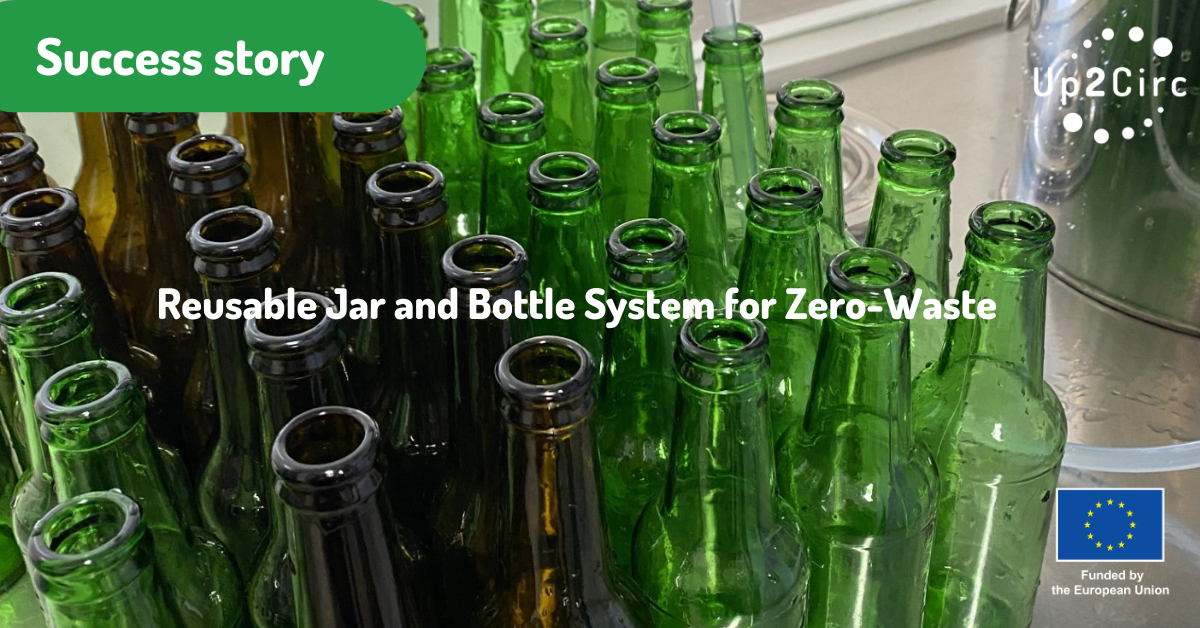
The feasibility study has validated a decentralised return‑and‑reuse model specifically designed for rural micro‑enterprises. The system enables the recovery of glass jars and bottles through local hubs—such as pharmacies, health food shops, and bars—followed by professional sanitisation using cost‑efficient, low‑CAPEX equipment. Once cleaned and inspected, the packaging can be reintegrated into the production cycle, supported by solar‑assisted infrastructure that ensures energy‑efficient thermal disinfection. In the case of the beverage, the reuse model has been extended beyond internal packaging by repurposing discarded beer bottles sourced from local bars.
CIRCULAR ECONOMY STARTEGIE/BUSINESS MODEL IMPLEMENTED
The YorGut Circular project has successfully applied four circular strategies to transform La Verabat operations:
- Narrow: reducing the demand for virgin glass by reusing existing containers, thereby lowering material input and operational expenses, as well as resources used for primary glass production.
- Slow: extending the functional lifespan of packaging, expecting to achieve between 25 and 30 reuse cycles of jars and bottles before they are recycled.
- Close: reintroducing glass containers into the production cycle after use by developing a community-based reverse logistics network that enables local collection and return via a deposit-refund system.
- Regenerate: reducing carbon footprint through a planned 9.00 kWp photovoltaic system with battery storage to cover approximately 67% of the total energy demand, including energy-intensive processes such as thermal disinfection of jars.
- MarketDifferentiation: positioning La Verabat as a sustainable brand and strengthening local circular alliances within the value chain.
IMPACT
These are the environmental, economic, and social benefits confirmed by this study:
Environmental impact:
- Estimated 72% reduction in CO2 emissions per jar and 68% per bottle compared to single-use alternatives.
- Avoidance of up to 5.3 kg of glass waste per jar and 4.1 kg per bottle over their respective lifespans.
- Reduction of 2.9 tons of CO2 annually through the integration of renewable energy in the cleaning process.
Economic impact:
- Projected 33% per-unit cost reduction in packaging after a break-even period of 8 to 12 months.
- Increased business resilience and market differentiation as a leader in sustainable, rural artisanal food production.
Social impact:
- High consumer and retailer interest in a deposit-return system, with expected return rates of 75–85%.
- Potential for local job creation in specialised roles such as collection, sanitisation, and reverse logistics within the rural community.
Community-based and decentralized model with potential to be replicated in similar rural contexts
KEY TAKEAWAY
Transitioning to a community-based return and reuse system is technically, legally, and economically viable for small-scale rural producers. By merging local logistics with renewable energy, micro-enterprises can significantly reduce their environmental footprint while enhancing their competitiveness through circular innovation.