Ocean Material
Toni Kienberger, CEO
Mobility, Transport, Automotive
Germany
Waste2Product Loop
Project scope
Introducing a digital take-back mechanism to industry to boost the environmental impact of pallets made of recycled ocean plastic further
Circular business model
Circular supply chain
Product life extension
Recovery and recycling
Company and project background
Can you give us a brief overview of your business and the specific project you implemented?
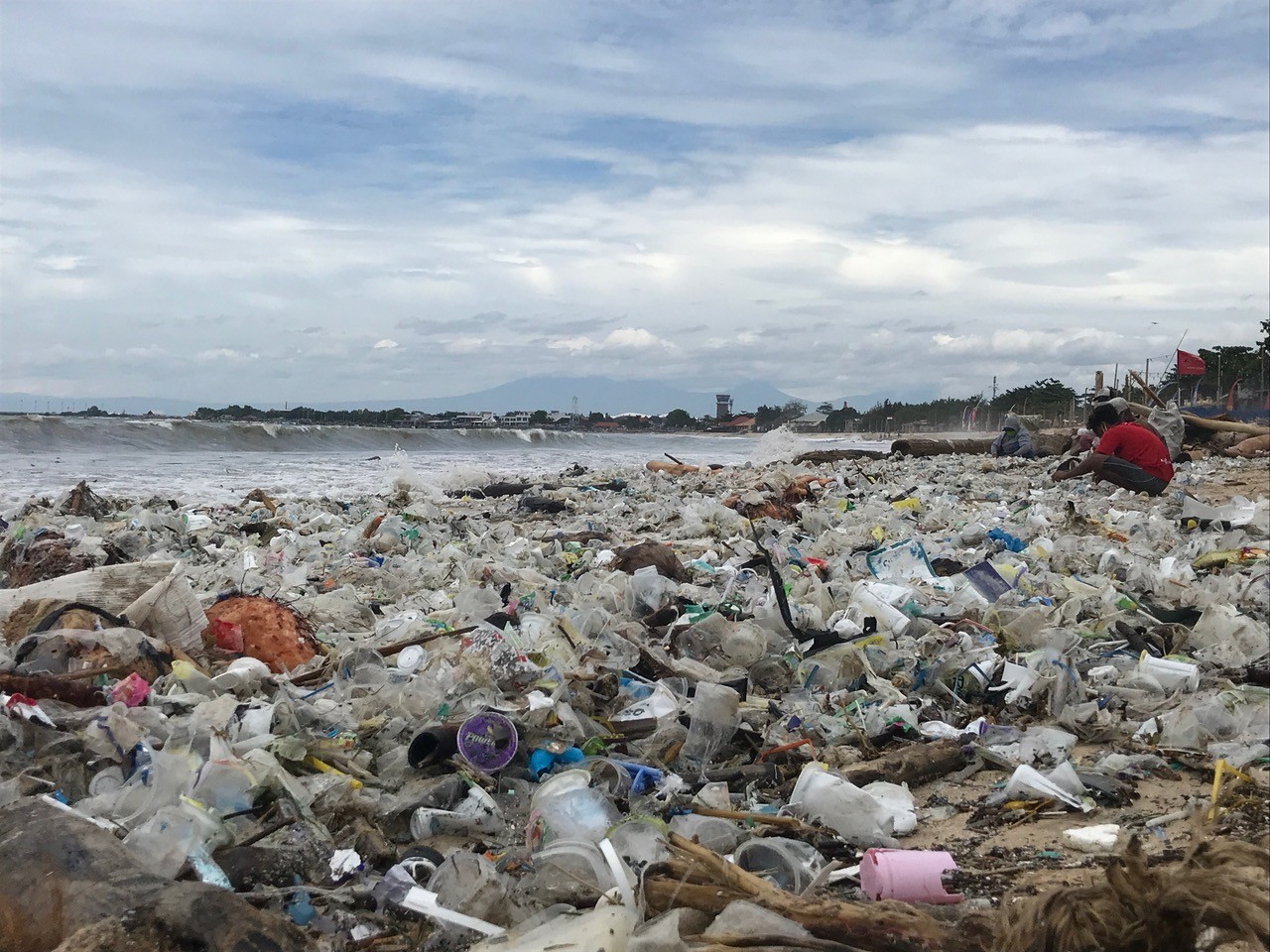
The problem of ocean plastic really appeared on our agenda in 2018, when we started with beach clean-ups. However, we quickly realised that this was a drop in the ocean and that the problem was systemic in nature, requiring a systemic solution. Two years later, we officially launched our initiative and began building a global supply chain programme focused on collecting and processing marine and ocean-bound plastic.
As we worked on this supply chain approach, it became increasingly clear that a significant share of the material – often estimated at around 70% – is not recycled in practice. This is not primarily due to a lack of willingness, but because these material streams are economically unattractive or technically difficult to process within existing recycling systems. This insight marked a turning point for us and led us to think beyond conventional recycling pathways.
In this context, we connected with our Swiss engineering partner, MeSentia, and initiated a joint development project aimed at addressing exactly this gap: how contaminated and low-value marine plastic could be processed in a technically robust and energy-efficient way. The recycling machine and process were therefore developed collaboratively, combining engineering expertise with practical insights from global material streams. Our goal is to bring this low-energy recycling approach to market.
In general, we are not a company that demonises plastic. For certain applications, plastic is a highly functional and useful material. The issue is not the material itself, but rather the scale and structure of its production and consumption, which have led to a massive waste problem that urgently needs to be addressed. We are fully aware that we cannot solve this alone, but we believe we can make a meaningful contribution.
As our work progressed, we also realised that developing a recycling machine alone would not be sufficient. We therefore expanded our approach to include a platform that integrates environmental data, material specifications and communication aspects. With the support of an experienced advisor from BlueInvest, we were introduced to the EU-funded Up2Circ programme. Within this framework, we identified logistics pallets as a promising niche application and addressed a central question: how can pallets be effectively returned and recycled in practice? This question was explored in depth during the six-month project. The results provided valuable insights and enabled us to develop a concrete concept for implementation, particularly with regard to logistics and infrastructure. Based on these findings, we are now preparing the next steps, including further scientific validation together with academic partners such as the Technical University of Hamburg and the Technical University of Magdeburg in subsequent project phases.
What motivated you to make your business more circular?
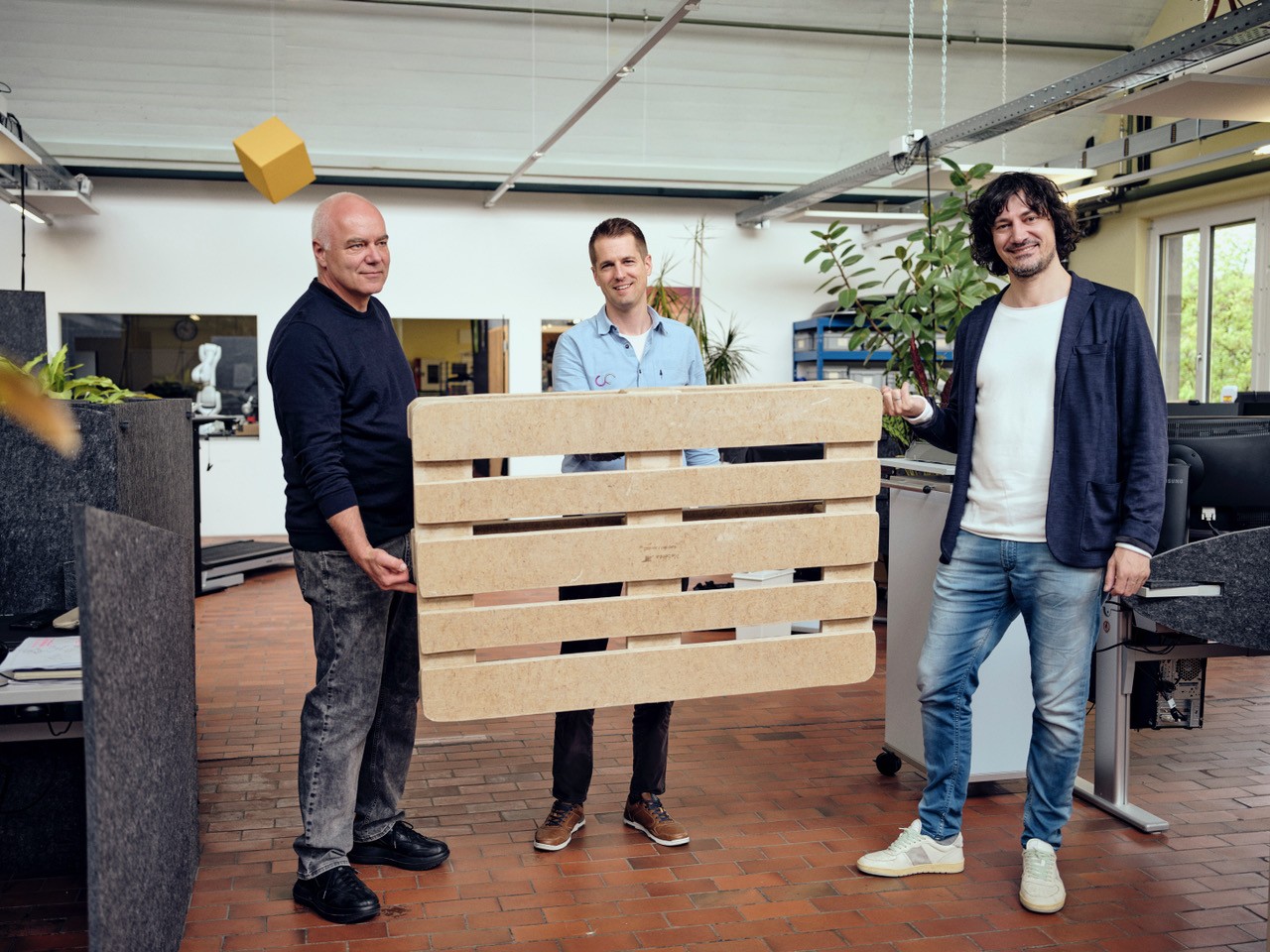
We are essentially dealing with two main markets: on the one hand, recyclers who have far too many plastic mixtures in stock and are struggling to find the right buyers for them. And then there are the manufacturers who have a lot of internal production waste and would like to put this waste back on the market instead of having to dispose of it. The question is, what do we do with this knowledge and what can we bring to the table ourselves? Lightweight, high-quality pallets. That is our contribution.
Many pallets are still made of wood, which is increasingly viewed critically, but not critically enough. Depending on how pallets are used in practice, the CO₂ bound in this wood is often only stored for a relatively short period – sometimes just a few months and rarely more than a few years – before damaged pallets are downcycled. With another material, such as plastic waste, it’s a different story. The material – plastic – is there, and we have the opportunity to circulate it much more often. We just aren’t exploiting this potential yet.
Implementation process
What were the main objectives of your feasibility study?
The project “W2P Loop: Closed-Loop Reverse Logistics System for Sustainable Pallets” assessed the feasibility of implementing a circular return system in logistics. The special environmental value is added by using our patented Waste-to-Product technology, which upcycles complex, economically unrecyclable plastic waste from the ocean into lightweight, high-performance composite pallets, primarily applied to logistics load carriers. The outcome was a decision-ready feasibility study defining viable return-system architectures, success metrics, and a go/no-go framework for future pilot implementation and scaling. This is where we are right now. The analyses showed that using our pallets made from recycled plastic, saves around 20,000 tonnes of CO2 per year compared to wooden pallets. This is mainly because they are lighter and can be used for much longer. Our production process enables us to avoid and/or recycle at least 8,000 tonnes of waste per year, and our decentralised system also contributes to greater energy efficiency.
What activities did you carry out during your project?
Our main focus was about collecting information about a structured mechanism to retrieve the products after use. Otherwise the circular potential of the material cannot be realised. The project focused on evaluating economic, technological, environmental, and regulatory feasibility of a closed-loop return system enabling reuse, traceability, and end-of-life material recovery. We validated hybrid circular business models combining service-based return logic, digital traceability, and controlled end-of-use recovery. Planned activities included market and system scoping, technology assessment, economic and environmental modelling, business model validation, regulatory fit analysis, and consolidation into a decision framework. We experienced a high stakeholder interest in circular solutions, especially among FMCG brands and logistics providers, but acceptance depends on practical incentive models. For us, this represents both a challenge and an opportunity: to create a return mechanism ensuring that Waste to Product pallets remain within the circular system and return for re-processing, closing the material loop. In the end we found a good solutions that integrates all demands.
What feedback did you receive from stakeholders (customers, suppliers etc.)?
We We interviewed both a partner company and a customer as part of the project. Initially, we had planned to conduct up to five interviews, but the responses we received were highly consistent, which allowed us to focus on these two in more depth. Overall, the feedback was very encouraging and, in some respects, even surprising. Many of the companies we spoke with had already been thinking intensively about pallets and recycling, largely due to new packaging and waste-related regulations coming into force in Europe. Disposal is increasingly no longer seen as a viable option, which significantly lowered the barrier for discussing circular pallet solutions. In general, there was a strong openness towards our approach, particularly among companies with high volumes of production waste and a willingness to switch to alternative pallet systems, provided these solutions are implemented in a genuinely circular way.
Based on this feedback, we refined our platform concept. At an early stage, we considered two possible approaches to involving companies in the pallet system: a traditional deposit system or the use of incentives. Through the interviews, it became clear that a deposit system would create unnecessary administrative complexity and was therefore not attractive for most customers. At the same time, we learned that additional incentives were not required, as the value proposition itself was already compelling for potential users.
As a result, we positioned ourselves less as an incentive-driven platform and more as a service provider that enables circular pallet flows. This shift in perspective led us to explore the concept of a virtual credit system, which could be applied to future orders and support long-term participation without adding administrative burden.
Impact & Outcomes
What were the main results and outcomes of the project for your company?
The key findings for us were answers to three central questions: what customers need in order to work with us, under which conditions the model pays off, and how a strategy for introducing the platform to the European market could look. If we then want to implement this globally, it will of course need to be adjusted. However, we will not be starting from scratch. The Up2Circ results therefore lay the foundation for insights that we can scale later.
To be more specific, we now have a first, model-based understanding of the return rate of our pallets, as this is essential for the business model. This data increases overall predictability and therefore improves the robustness of the business model. In addition, based on return flows and transport savings, we can estimate a system-level improvement in energy efficiency of around 30%. For the recycling machine itself, these assumptions will have to be confirmed once the machine has been built and commissioned, as this cannot be validated at this stage.
Compared to conventional pallet systems, including wood-based pallets, our pallets made from recycled marine plastic show significant savings potential. Preliminary assessments based on weight and logistics considerations indicate that energy demand could be several times lower. These estimates are derived from scenario modelling and will be further refined and validated in future pilot phases.
Have you already implemented any changes?
Since the project was primarily aimed at gathering and validating knowledge, we have not yet implemented any concrete changes during these six months. However, we now have a clear understanding of the steps required and are planning the implementation of our platform based on the project results. The platform is expected to be ready within the next six months. If development continues as planned, the recycling machine is expected to be completed and ready for commissioning within the next 12 to 15 months.
Lessons learned
What key lessons did you learn regarding circular innovation?
Our experience in this field has taught us that, in the circular economy, the same thing does not always have to be created from the same thing. That was my initial assumption: how can a dirty plastic bottle be turned into a new, clean plastic bottle? While this is certainly desirable, it is not always as effective as it may seem at first glance. Such approaches can result in very limited and narrow product cycles.
What helped us was broadening our perspective and clarifying what we are actually trying to achieve: keeping materials in use. This does not necessarily mean that materials always have to be used in exactly the same way. Plastic from a drinking bottle, for example, could be used as packaging in its next life. From our perspective, the sustainability of the business model needs to be considered from the very beginning. Thinking about which material cycles exist, how large they can be, and which applications certain materials are best suited for is part of the innovation itself.
For those who are new to this type of business, the complexity of circular systems can be overwhelming at times. What helped us was to view the project as a long-term vision rather than a single, clearly defined milestone. A balance between flexibility and structure proved to be essential. Perhaps this insight can also support other entrepreneurs who are considering entering the circular economy.
Did you encounter any challenges?
Overall financing is naturally challenging in mechanical engineering. Significant upfront investments in time and capital are required, and the right expertise needs to be brought on board early on. This is an inherent part of developing industrial technologies.
In addition, the recycling industry across Europe is currently facing a difficult situation, partly due to a lack of effective incentives for cross-sector cooperation. On a more positive note, however, the European Packaging Regulation has clearly supported our approach and opened up new opportunities by increasing awareness and demand for circular solutions.
Future plans & recommendations
What are your next steps towards circular transition?
We are highly motivated to further build on the opportunities offered by the circular economy and to implement additional elements step by step. In particular, we are focusing on improving return rates, as they are a key lever for both economic viability and environmental performance. At the same time, we are exploring partnerships along the value chain that can support more efficient return logistics and regional implementation, while continuously refining our platform-based service approach.
Is there any advice you would give to other SMEs looking to adopt a circular business model?
As an entrepreneur, you should always focus on the product first. In theory, almost everything can be recycled, but there are ways to make this much easier in practice, starting with thoughtful product design. Many future challenges can already be avoided at this stage.
Separately, it is equally important to look at packaging. Here, a very simple question can be helpful: do we even need this packaging, or can we do without it?
At the same time, I am aware that different sectors face very different constraints and challenges, and I do not want to lecture anyone. Rather, this perspective is meant to encourage early and honest reflection on both product and packaging choices.
How can policymakers or financial institutions better support businesses in adopting circular practices?
There are many fees and compliance-related costs associated with sustainability measures that, in practice, can sometimes have unintended negative effects. In our view, such mechanisms could be designed and applied in a more targeted and effective way. A more detailed discussion would go beyond the scope of this article.
At the same time, I believe it is both good and important that green claim regulations exist, as they create greater transparency and trust. However, it is also a reality that for some companies, non-compliance can become a calculated risk, as penalties may appear less burdensome than the effort required to fully comply. Ultimately, this becomes an economic calculation. If adjustments were made to better reward cooperation with innovative companies and practical implementation efforts, this could significantly strengthen the sustainability ecosystem. Continuously postponing action to 2030, 2040 or 2050 risks shifting the problem further into the future and weakening innovation and market development, for example in the recycling sector. We want to and we can act now. The innovations and the will are there.
Do you have any additional comments or reflections about your participation in the Up2Circ project?
Up2Circ is a very powerful programme that has also given me a great deal of personal insight and learning. This was in particular due to the assessment at the very beginning, which allowed me to put everything on the table again and critically reflect on our own company and approach.
In addition, the combination with the Enterprise Europe Network and the resulting connections to other companies has been extremely valuable and continues to be so.
Thank you for your time and contribution!