
COMPANY NAME
Cafés du sud
COUNTRY
France
SECTOR
Food and beverage
CIRCULAR BUSINESS MODEL
Sustainable agriculture, Waste-to-Value, Regenerative agriculture
CHALLENGE
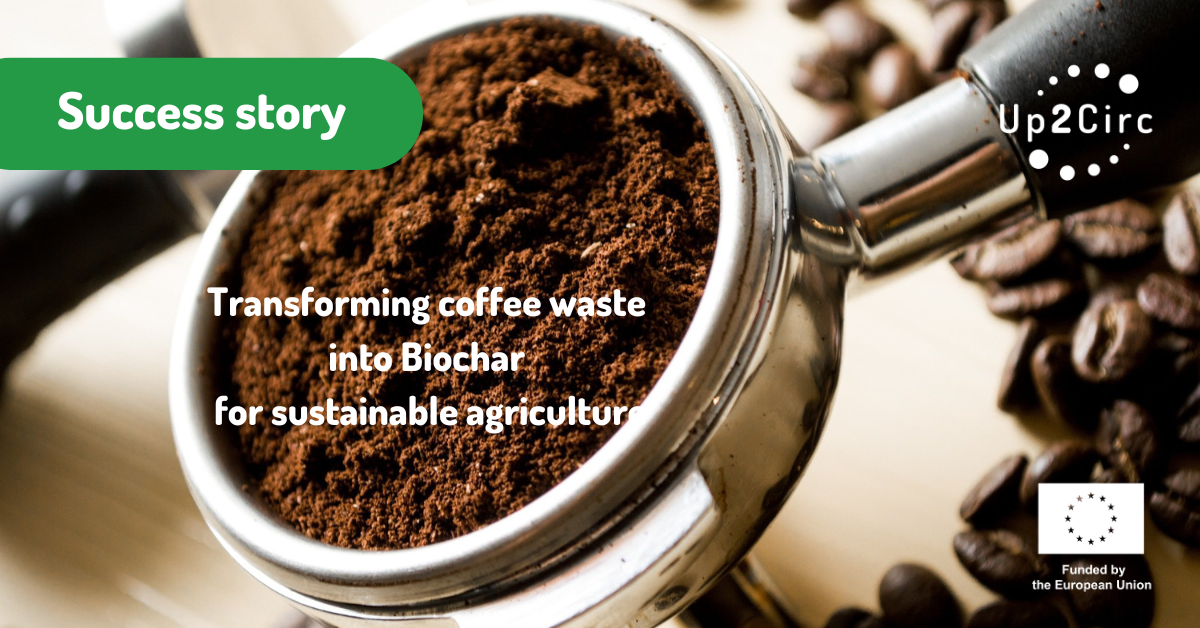
Every year, millions of tonnes of coffee grounds end up in landfills worldwide. At Cafés du Sud, a specialty coffee roaster in the south of France, they saw this as both a problem and an opportunity. They collect nearly 4 tonnes of coffee waste annually from their office clients—wet, organic material that was simply being thrown away. Meanwhile, local farmers struggle with drought, poor soil quality, and declining harvests. What if they could turn one problem into a solution for the other?
SOLUTIONS
They transform spent coffee grounds into biochar—a carbon-rich soil amendment that helps plants thrive while locking away CO₂ for centuries. The process is straightforward: collect coffee waste from offices, dry it efficiently, then convert it into biochar through controlled heating. The result? A valuable product that local vineyard owners, olive growers, and vegetable farmers are eager to use.
CIRCULAR ECONOMY STRATEGIES/BUSINESS MODELS IMPLEMENTED
The approach applies four key circular economy strategies:
Narrow – Less waste through better collection and processing
Slow – More value by turning short-lived waste into long-lasting soil carbon
Close – Returning nutrients from city to farm, completing the cycle
Regenerate – Improving soil health, water retention, and climate resilience
IMPACT
For the Planet
✓ 80% of coffee waste diverted from landfill
✓ Up to 350 kg of CO₂ stored per tonne of coffee waste processed
✓ Solar-powered potential: 30-60% renewable energy use
For the Economy
✓ Farmers willing to pay €300-700 per tonne of biochar
✓ New revenue stream from waste that used to cost money to dispose
✓ Replicable model for other food businesses
For the Community
✓ Creating new local jobs as we scale
✓ 25 farmers already engaged through university partnership
✓ Building bridges between urban businesses and rural agriculture
KEY TAKE AWAY
Small businesses can make a big difference. The coffee-to-biochar journey proves that circular economy isn’t just for large corporations—it’s an opportunity for any company willing to look at waste differently. The support from Up2Circ gave the structure to turn an idea into a validated business model. Now they are ready to scale: the pilot is approved and farmers are waiting. Organic waste might just be someone else’s treasure.