
COMPANY NAME
The Vegan Goodlife GmbH
COUNTRY
Germany
SECTOR
Textiles
CIRCULAR BUSINESS MODEL
Circular product design
CHALLENGE
Leather processing consumes significant energy, water and toxic chemicals, making it highly environmentally damaging, while there is a lack of end-of-life solutions beyond landfilling or incineration. In addition the design of luxury accessories such as hand bags and production does not follow circular economy approaches in most cases. Material is wasted and products are usually not easy repairable.
SOLUTION
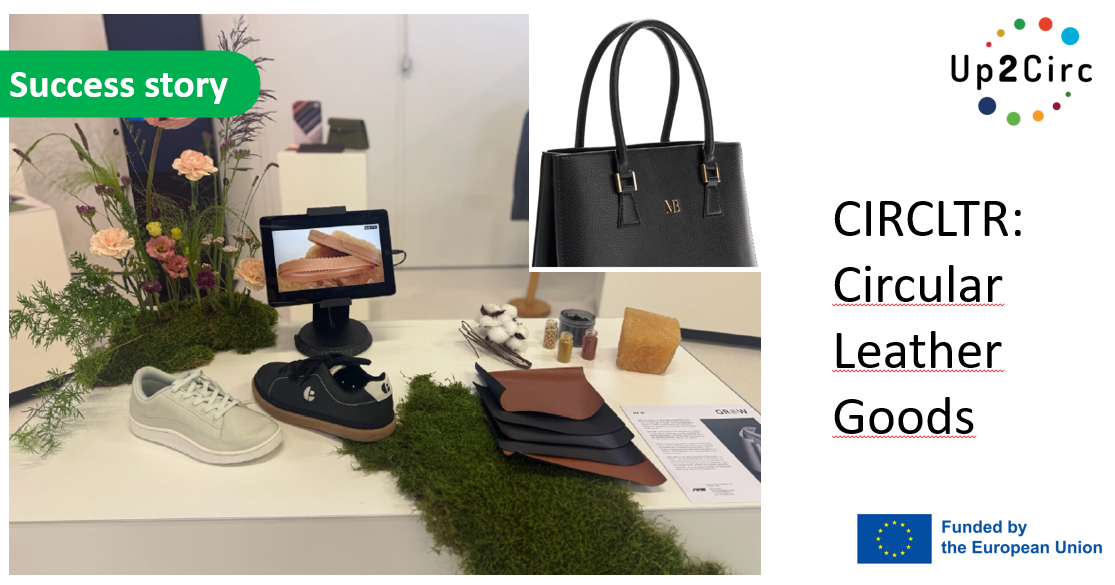
The CIRCLTR project has successfully demonstrated that luxury leather goods can be designed, produced, and maintained within a circular and regenerative system. Led by Melina Bucher, one of the last artisan handbag manufactories in Germany, the project combined biomaterial innovation, digital manufacturing, and educational collaboration to redefine sustainability standards and introduce circular economy principles in the European accessories sector.
CIRCULAR ECONOMY STRATEGIES/BUSINESS MODEL IMPLEMENTED
In order to further strengthening circular economy approaches within the own business model nearly all conventional, fossil-based components were replaced with biobased, vegan material solutions. Furthermore the material waste was reduced significantly through the application of laser cutters and software plus the design was changed in a way that components can be easily replaced.
IMPACT
Using a structured in-house testing protocol we achieved 95–100% biobased content in the final prototypes of our products. Beyond, digital transformation played a key role: all production patterns were digitalized, and a laser cutter with integrated optimization software was introduced. This led to material waste of less than 5%, improved cutting precision by 60%, and enabled future on-demand production models. Complementing these advances, the company developed a repairability framework ensuring long product lifespans through modular design, replaceable components, and service-oriented construction.
The project also fostered significant knowledge transfer and social innovation. Two new craftswomen were hired during the project, and training on circular materials and digital tools was conducted. In collaboration with University of Pforzheim, the GROW Exhibition at ILM Offenbach was organised, where hundreds of industry professionals and students were reached with hands-on expertise on biomaterials and circular design.
KEY TAKEAWAY
The CIRCLTR project has laid the foundation for a new, regenerative model in European leather goods – proving that luxury and circularity can coexist, driving both economic resilience and environmental regeneration.