
COMPANY NAME
COUNTRY
Spain
SECTOR
Agrifood
CIRCULAR BUSINESS MODEL
Recovery and recycling
CHALLENGE
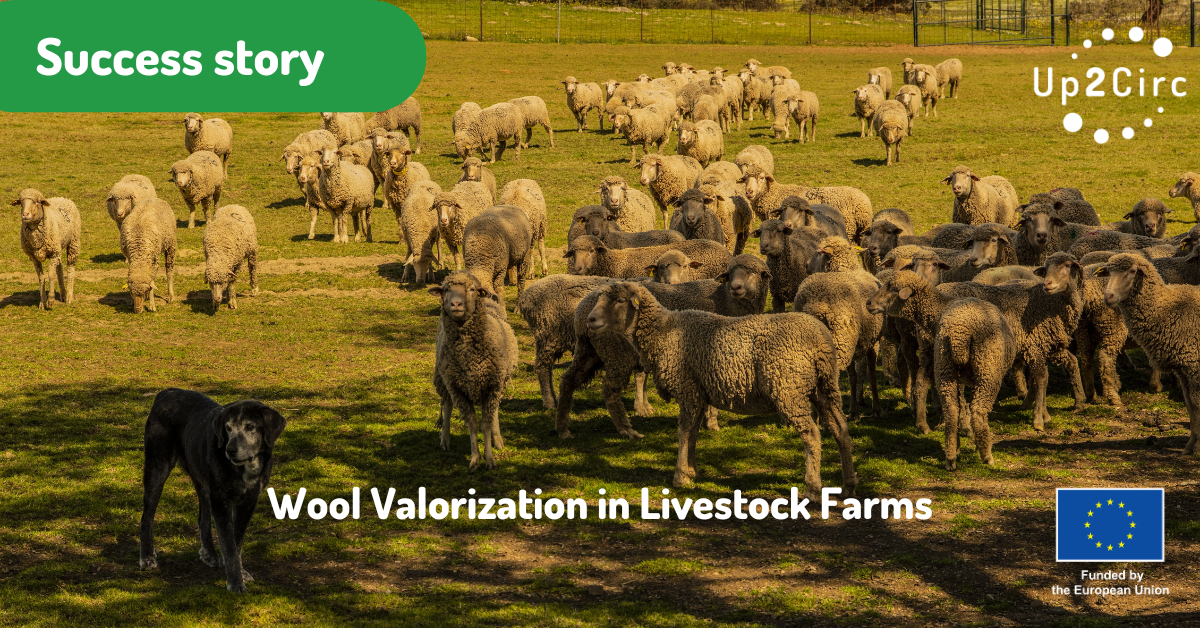
The sheep farming sector has experienced a sharp decline, losing nearly 50% of its operations over the past decade due to rising production costs, declining market demand, and other factors that have forced many farmers out of business and led them to discard much of the wool produced as waste. Currently, around 60% of the wool produced on the five extensive farms analysed in this project cannot enter high-value textile markets and is instead treated as waste, creating a net disposal cost for farmers. At the same time, the dehesa ecosystem—characteristic of the Extremadura region— faces growing threats from desertification and soil‑borne pathogens, highlighting the urgent need for sustainable strategies to regenerate soils and manage emerging diseases.
SOLUTION
Through the WOOLVALUE project, the company Soluciones Dehesa Sana has validated a circular on-site pathway to transform low-value wool into high-quality biofertilisers and soil regeneration agents. The solution involves a comprehensive composting methodology that integrates wool unsuitable for the textile market with other farm residues generated on the same extensive farms, such as manure and pruning waste. This process yields a nutrient-rich compost and a new circular biostimulant product line, specifically designed to enhance soil biodiversity and water retention directly within extensive livestock farming systems.
CIRCULAR ECONOMY STRATEGIES /BUSINESS MNODEL IMPLEMENTED
The WOOLVALUE project has successfully implemented key circular strategies to revitalise rural livestock systems:
- Narrow – Resource efficiency: reducing the agricultural sector’s dependency on synthetic fertilisers and energy-intensive chemical inputs.
- Close the loop: reclaiming wool previously treated as waste to serve as a high-performance carrier for biostimulants and nutrients.
Regenerate the ecosystems: using wool-enriched compost to restore soil health, improve moisture management, and combat phytopathogenic microorganisms.
IMPACT
The study has delivered validated environmental, economic, and social performance unique improvements for Soluciones Dehesa Sana.
Environmental impact:
- 50% reduction in water consumption throughout the composting process by leveraging the natural moisture in fresh manure.
- Total reduction of 72 kg of CO2 emissions during the project by reusing wool and other organic waste directly on the farms and eliminating the need for external transport and processing.
- Recovery of 5 MWh of energy.
- Significant improvements in soil biodiversity and water retention.
Economic impact:
- Successful valorisation of wool into biostimulants with potential market prices of €6–€8 per litre against production costs of €2–€3.
- Multiplied value of raw material from €220 per tonne to potential values reaching €1,100 per tonne in finished products.
- High financial viability due to minimal CAPEX, as existing farm machinery and residues are utilised.
Social impact:
- Job retention in rural areas by creating new specialized roles in biotechnology and circular production.
- Improved gender parity within the agricultural sector through the inclusion of female researchers and technicians.
Enhanced profitability and autonomy for extensive livestock farmers by reducing the burden of waste management and creating new incomes.
KEY TAKEAWAY
The WOOLVALUE project demonstrates that composting is a robust and scalable circular solution that turns an environmental burden into a strategic resource, delivering measurable benefits for soil health, rural employment, and business competitiveness