
COMPANY NAME
Tsenso GmbH
COUNTRY
Germany
SECTOR
Agrifood / Digital
CIRCULAR BUSINESS MODEL
Product as a Service
CHALLENGE
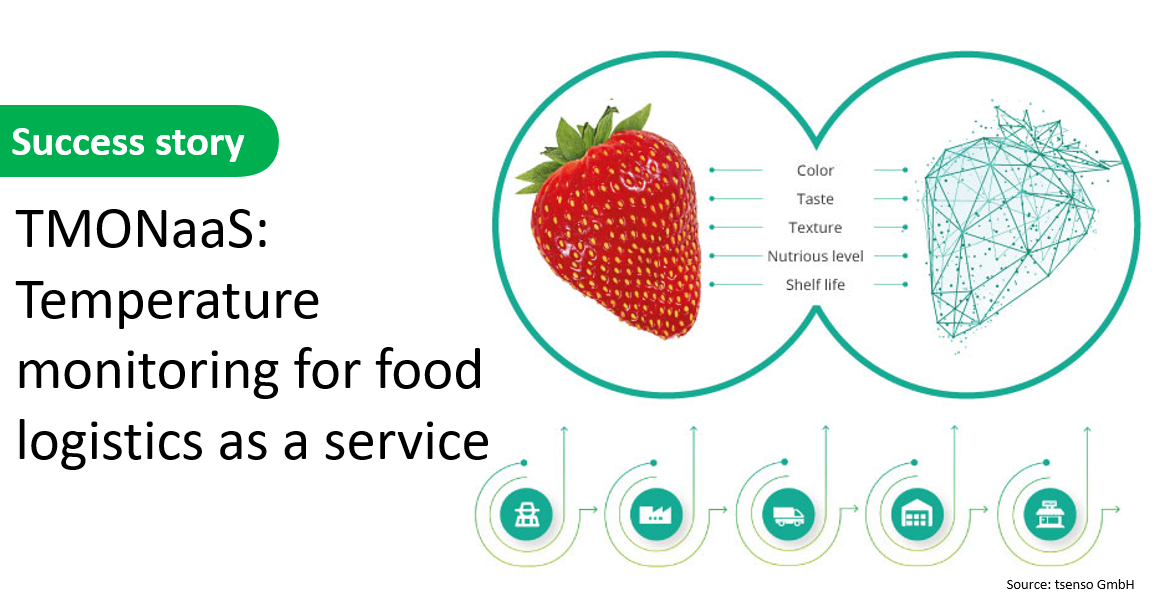
Tsenso equips food crates with small temperature sensors to ensure that the cold chain between the manufacturer and the retailer remains unbroken and the products stay fresh. The sensors are battery-powered and have a lifespan of at least one year. Currently, retailers dispose of the sensors as soon as the goods are received. As a result, thousands of fully functional battery-powered sensors are regularly discarded after a single use.
SOLUTION
The projects aims to investigate the possibilities of reducing this electronic waste by offering temperature monitoring as a service. Tsenso seeks to provide their customers with devices as a rental service at their needs and take care of the used devices on their own. This way the share of reused sensors shall be increased. During the study business, technical, and customer relationships aspects were studied with a focus on which incentives are needed for customers to increase the return rate of devices.
CIRCULAR ECONOMY STRATEGIES/BUSINESS MODEL IMPLEMENTED
The company focused on a product as a service strategy in order to keep the sensors longer in use and avoid electronic waste. Exploring different kinds of incentives for workers to return sensors, it became clear that these incentive mechanisms need to comply with the customer’s existing buying and handling processes. The circular business model product-as-a-service is not really known and accepted yet within the customer’s purchase departments.
Nevertheless, the customer feedback showed a high interest in reducing electronic waste. Warehouse managers and logistics workers do have a need for a practical solution for either disposal or return of sensors. Finally, the easiest way was providing warehouses cooperating in this field study with a sensor return box, in which all sensors can be collected and sent back to Tsenso as part of the TmonAAS project. This approach was supported immediately. The sensor box was even returned by the warehouse on their own costs to support sustainability efforts. 49 of the 50 test sensors were returned fully operational and were reused, thus allowing us to offer more competitive pricing for the customers next order.
IMPACT
The study showed that it is possible to implement circularity efforts within the company and together with customers with very small efforts. Although a true “temperature monitoring as a service” business model is currently not feasible, other incentives to return the devices were identified, enabling also the next steps with refurbishment and reuse. With a high return rate as indicated in our field study and up to 10 use cycles per device, we can reach a significant increase of circularity for our company.
The TMONaaS project was perceived highly positive. During the alignment of the device return process, several concerns were communicated and solved. The sensor return box might turn out to be only a temporary solution. More time and effort will be needed before returnable sensors are widely established along the food supply chain.
Economic impact:
The study showed that the re-use of sensors can significantly reduce the cost per device use, even if each device needs to be re-checked before being issued again and considering the loss and failure rates of the devices
KEY TAKEAWAY
The Up2Circ project provided excellent motivation to test the feasibility of re-using devices. The technical and commercial results are promising. Re-using devices not only prevents eletronic waste but allows an improvement of cost structures and an even more competitive pricing plan. As the first step towards a roll-out, sensor recycling boxes will be offered to several warehouses and reports of the resulting CO2 savings will be issued accordingly as a reward for customers.