
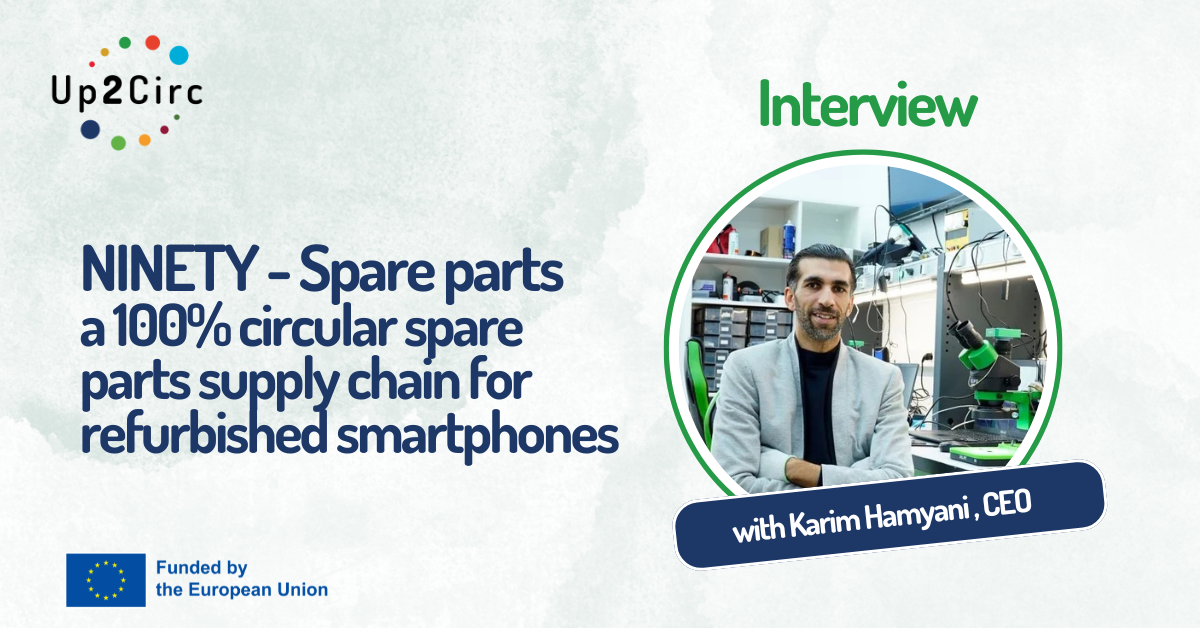
Ninety SAS
HAMYANI Karim, CEO
Electronic
France
PROJECT SCOPE
Feasibility study for the implementation of a circular refurbished spare parts supply chain for smartphones
CIRCULAR BUSINESS MODEL
Product life extension
Circular supply chains
Company and project background
SAS Ninety operates in the refurbished smartphone sector. Our core activity is the recovery, testing, repair and resale of smartphones. The Up2Circ project focused on assessing the feasibility of implementing a circular refurbishment activity dedicated to high-value smartphone spare parts.
Our core products are refurbished smartphones and electronic repair services. The circular project started as a strategic reflection on how to move beyond simple refurbishment and create a fully circular value chain, by refurbishing and reintegrating original spare parts such as screens, chassis, motherboards and cameras.
This project aligns perfectly with our mission: reducing electronic waste, strengthening local technical expertise, and decreasing dependency on imported new spare parts.
What motivated you to make your business more circular?
The main motivation was to address a structural gap in the French refurbishment market: most players rely heavily on importing new spare parts instead of refurbishing original components.
The opportunity was both environmental and economic. Regulations, increasing customer awareness, and the need for more resilient local supply chains were strong external drivers.
Implementation Process
What were the main objectives of your feasibility study?
The feasibility study had three main objectives:
1) Assess market demand for refurbished spare parts;
2) Evaluate environmental and social impact;
3) Determine technical and financial viability.
What activities did you carry out as part of your project?
We conducted a market study, an impact analysis aligned with SDGs, and a technical feasibility study covering equipment, training needs and investment requirements.
What feedback did you receive from stakeholders (customers, suppliers etc.)?
We involved industry professionals, wholesalers, refurbishers, marketplaces and technical experts. More than twenty interviews were conducted to validate assumptions and market potential.
Impact & Outcomes
What are the main results and outcomes of the project for your company?
The study confirmed that refurbishing four key components (screens, chassis, motherboards, cameras) represents a strong economic opportunity.
Did you detect a positive impact of circular transition for your company and for the environment?
A refurbished smartphone generates 8 times less environmental impact than a new one and saves approximately 79kg of CO2 per device.
The motherboard refurbishment alone accounts for up to 40–50% of total CO2 savings compared to manufacturing new components.
The project also creates social impact by fostering highly skilled local jobs in micro-soldering and advanced technical repair.
Which changes have you already implemented?
As a result of the study, Ninety decided to focus initially on offering refurbishment services rather than selling spare parts directly, as this model proved more viable in the current market structure.
Investment in technical equipment and team training is planned as the next operational step.
Lessons learned
What key lessons did you learn regarding circular innovation?
We learned that circular innovation requires deep technical expertise and stable sourcing flows. Market structuring is still limited, and data availability remains a challenge. A key lesson is that partnerships and long-term sourcing agreements are essential for economic viability.
Did you encounter any challenges?
The main barriers were limited market data, difficulty accessing public institutions, and the informal nature of refurbished spare parts sourcing.
If you could do your project again, what would you do differently?
Technical skills such as advanced micro-soldering are scarce in France, which required additional investment planning.
Future plans & recommendations
What are your next steps towards circular transition?
For SMEs starting their circular transition, we recommend beginning with a feasibility study focused on technical viability and sourcing stability.
Is there any advice you would give to other SMEs looking to implement a circular project?
Avoid underestimating the importance of training and industrial process standardization.
How can policymakers or financial institutions better support businesses in adopting circular practices?
Policymakers can support SMEs through targeted grants for technical equipment, specialized training programs and stronger regulatory incentives for circular supply chains.
Do you have any additional comments or reflections about your participation in the Up2Circ project?
Participation in Up2Circ provided strategic clarity and strengthened Ninety’s positioning as a 100% circular player. The project validated the long-term profitability and environmental relevance of spare parts refurbishment in Europe.